

In today’s globalized world, the influence of culture and trends from different countries has become increasingly prominent. Two noteworthy phenomena, Guochao in China and Hallyu from South Korea, have influenced consumption choices of luxury, food and beverages, fragrances, and many other goods and services. Recognizing this influence, many brands have actively embraced and leveraged Guochao and Hallyu to keep their existing customer base while also attracting new ones. Those who have adeptly navigated these trends and incorporated them into their strategies have experienced fruitful outcomes and success in the market.
Read our Korea’s MZ Generation report

From tradition to innovation: Exploring Guochao in Chinese consumer culture
Guochao (国潮 in Chinese), literally meaning “national trend/wave”, refers to the consumers’ preference for Chinese brands, designs, and culture. It goes beyond seeking products solely based on being “made in China” and instead focuses on innovation through a distinctly Chinese approach. The emphasis is not on mass production of goods at a low cost, but rather on creating inventive products that combine traditional Chinese elements with modern ones, evoking a feeling of national pride.
From beauty and fashion to F&B: Exploring the Hallyu wave and its global influence
Hallyu (한류 in Korean), or the “Korean Wave”, refers to the spread of South Korean cultural exports to other countries. It started with K-dramas and K-pop and has been expanding to other areas, including fashion, food and beverage, and literature. Once limited to the Asian region, it is expanding to the Americas, Europe, and even Africa. It has truly become a global phenomenon that even if brands are not operating in Korea or targeting Korean consumers, the wave still influences their consumers.
Differences between Hallyu and Guochao
Evolving Guochao: From domestic pride to global ambition
In the past few years, Guochao has evolved significantly. What began as an inward-looking movement centered on cultural confidence and the rediscovery of Chinese aesthetics, often described as Guochao 1.0, has since matured through several stages. Guochao 2.0 saw Chinese brands deepen their investment in design, storytelling, and product innovation, gradually reshaping perceptions of “made in China” and building recognition across Southeast Asia and cross-border e-commerce channels.
Today, Guochao has entered a new phase often referred to as 3.0, where its ambition is no longer limited to domestic identity-building. Chinese brands in beauty, fashion, lifestyle, and F&B are experimenting with global expansion, exporting not only products but also aesthetics and narratives. While still early and more commercially driven than culturally driven, this shift signals China’s growing confidence in presenting its creativity on the world stage.
Despite this evolution, Guochao’s global influence remains distinct from Hallyu. South Korea’s cultural wave is anchored in entertainment – K-pop, K-dramas, and film – which naturally accelerates soft-power diffusion and has benefited from two decades of coordinated industry development.
Guochao, by contrast, is propelled by consumer brands and design culture, making its international rise more fragmented and slower to translate into cohesive cultural export. As Guochao 3.0 continues to take shape, it is beginning to step outward, but its trajectory, industry anchors, and global impact still differ fundamentally from the established and entertainment-driven reach of Hallyu.
Hallyu’s impact goes global
Unlike Guochao, Hallyu’s influence expands beyond South Korea’s borders. Even the term itself was popularized after Korean TV dramas, like “What is love?” and K-pop bands like H.O.T., gained popularity in China, Japan, and other regions.
K-beauty trends, for example, are reshaping foreign perceptions and behaviors. The Korean glass skin (물광 피부), which refers to a dewy, transparent, and smooth complexion, along with derm treatments, received attention in the United States. Many Americans now adopt Korean skincare routines and use their beauty products to achieve this look. Some even incorporate derm clinic sessions into their trips to Korea, especially as these treatments gain visibility through social media influencers. Moreover, Olive Young, the top health and beauty store in Korea, is also expanding globally, making K-beauty more accessible. In fact, it is expected to open its first store in California in May 2026. According to one of their representatives, they are discussing with over 400 K-beauty brands and global brands to provide a wide range of beauty and wellness products.

Similarities between Guochao and Hallyu
Popular particularly among the young people
The Guochao and Hallyu trends primarily appeal to the younger generations, such as the MZ Generation (MZ세대). The Gen Z in China is willing to support domestic products across different industries, including fashion, household supplies, and home appliances. They do so because they have high confidence in their national identity and traditional culture, and they have access to digital platforms that promote local brands.
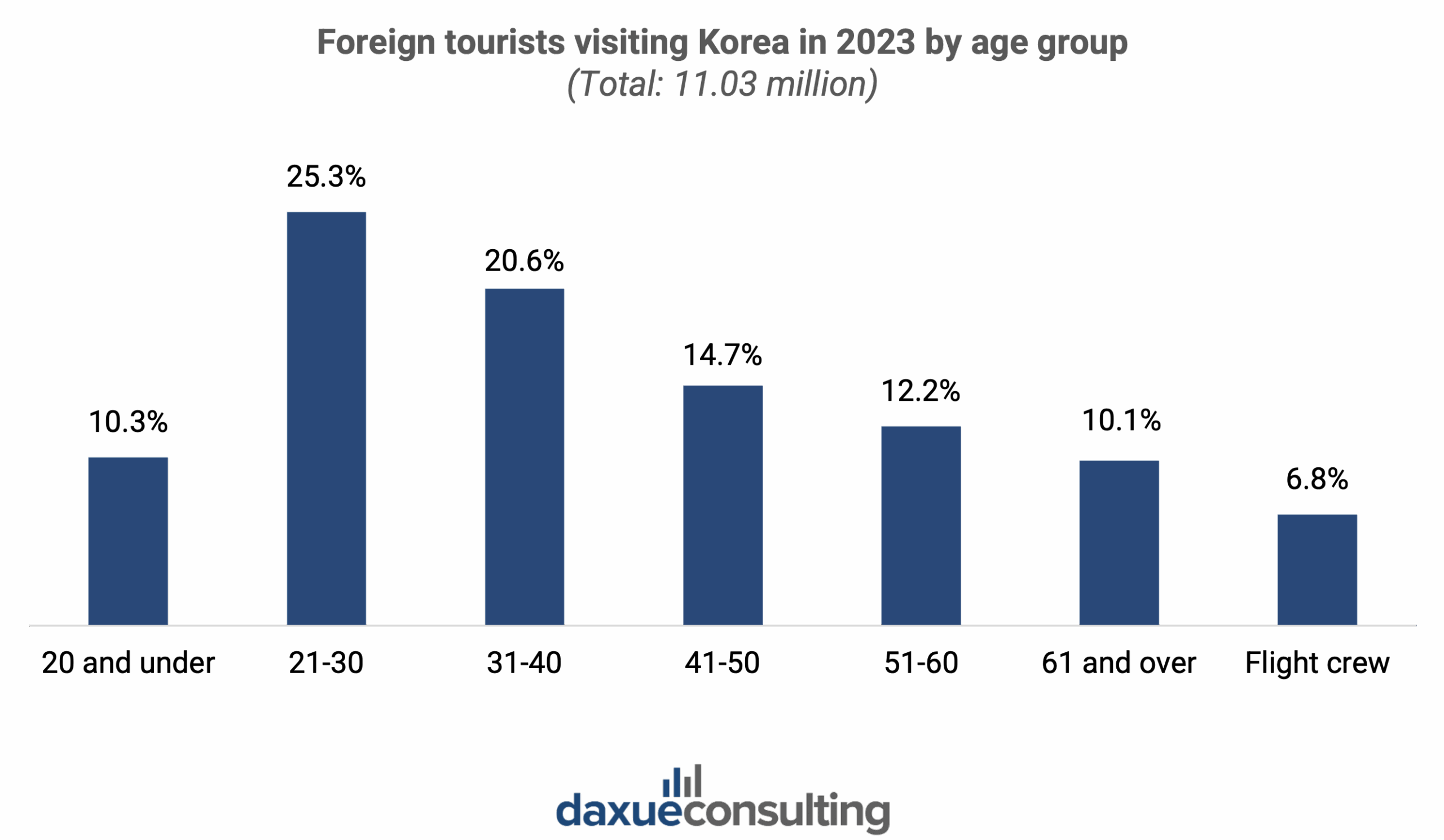
As for Hallyu, it has attracted many young people and the age profile is getting younger. According to the Korea Tourism Data Lab in 2024, among 11 million foreign visitors to Korea in 2023, 36% were aged 30 years and below, a rise from 28% in 2013.
The government backs the trends, promoting local culture and boosting domestic economies
In South Korea and in China, the governments support the Hallyu and Guochao trends, respectively, which increases greater awareness and understanding of the local culture among foreigners and the growth of the domestic economies.
Chinese government support for Guochao
Government priorities around “cultural confidence” and “dual circulation” have continued to reinforce the rise of Guochao, supporting both domestic consumption and China’s growing ambition to project cultural identity outward. In recent years, national and regional cultural initiatives, from museum collaborations to state-backed festivals and heritage revival programs, have made Chinese aesthetics more visible and commercially relevant, giving brands a stronger creative foundation for Guochao 2.0 and 3.0.
Meanwhile, geopolitical tensions and periodic disputes involving foreign companies have further strengthened consumer preference for homegrown brands, not through direct mandates but through a broader climate that favors local innovation, supply-chain independence, and national pride. This combination of cultural policy support and shifting consumer sentiment has helped Guochao evolve from an inward-facing trend into a more confident movement now exploring global expression, even as it continues to grow alongside China’s broader soft-power aspirations.
South Korean government support for Hallyu
South Korea’s government has been supporting Hallyu since the early 1990s. The Ministry of Unification, for example, arranged famous people like K-pop group Red Velvet and balladeer Baek Jiyoung to perform in Pyongyang, North Korea in 2018, as part of a cultural exchange event between North Korea and South Korea. This didn’t only receive attention from local residents, but also from around the world.
Additionally, under the Lee Jae-myung administration, the government plans to make major reforms in Korea’s culture, sports, and tourism sectors. During the president’s presidential campaign, he pledged to “realize Korea as one of the It aims to expand Korea’s culture market to KRW 300 trillion” by expanding K-culture and enhancing its competitiveness.
Hallyu trend spreading to China and other parts of the world
K-dramas, movies, and other forms of culture going viral in China
When it comes to Korean dramas and movies, they have gained a lot of popularity in China. For instance, despite not being legally available in China, The Glory (더 글로리), Squid Game (오징어 게임), and Extraordinary Attorney Woo (이상한 변호사 우영우), and other Korean content have been widely watched in China. When Squid Game went viral in China, many people began to follow the dalgona trend and numerous products and merchandise related to it were sold on various online and offline platforms. Additionally, there are trends in other sectors such as the Korea F&B culture that started in South Korea and then spread to China.
Product placement in K-dramas to target worldwide viewers
As South Korean TV series are watched by people all over the world, Chinese and other foreign brands are leveraging embedded marketing to promote their brands and products. Chinese brands have appeared in several TV series, such as Chinese brand Zi Hai Guo’s instant rice meal appearing in one of the scenes in Vincenzo (빈센조) and e-commerce platform JD.com advertisements in True Beauty (여신강림). Although South Korean netizens weren’t happy about them, they do bring exposure to Chinese brands and products among international viewers.
From love to hate: How brands are leveraging Guochao, eliciting emotional connection and even controversy
Brands continue to tap into Guochao by blending Chinese traditions and modern elements, creating products that evoke nostalgia, cultural pride, and even heated discussion. A recent example is the collaboration between Luckin Coffee and the highly anticipated Chinese game Black Myth: Wukong. Themed “Where Has the Deer Gone?”, the campaign introduced a special beverage, the “Cloud Roaming Americano,” alongside a series of creative merchandise such as cup sleeves and tote bags.
The collaboration cleverly merges coffee culture with the excitement of a domestic gaming phenomenon, targeting younger consumers who are both fans of the game and core customers of Luckin Coffee. Beyond just selling drinks, the campaign offered immersive experiences and collectible items that amplified engagement, strengthened the brand’s cultural relevance, and created widespread buzz on social media. The design of the merchandise drew directly from iconic elements in the game, letting consumers enjoy the product while immersing themselves in the game’s cultural narrative.
This case illustrates how modern Guochao campaigns are no longer limited to heritage-based nostalgia. They combine innovation, pop culture, and interactive experiences, sometimes provoking debate, but always deepening connections with young, culturally engaged consumers.

Guochao missteps by luxury brands
However, not all Guochao marketing cases are successful, as illustrated by two examples in the luxury market in China. Dior’s 2022 release of a pleated skirt sparked outrage among Chinese people. Despite the brand’s attempt to create a product that reflects Chinese culture and heritage, it was criticized for plagiarizing the traditional Chinese hanfu.
Another recent example occurred in 2024 with Fendi, which collaborated with a Korean artisan on a limited-edition bag. The product featured a woven design closely resembling the traditional Chinese knot. While Fendi promoted it as a “traditional Korean knot,” Chinese consumers reacted strongly, labeling the move as cultural appropriation. Many pointed out that Chinese knots are a centuries-old heritage, celebrated throughout dynasties from Tang to Qing and symbolizing good fortune.
Despite customer complaints and growing public outcry, the brand initially remained silent, quietly removing promotional content by February 2025 without issuing an official statement. Discussions on Weibo went viral, with the hashtag #OneChineseKnotADay gaining millions of views, reflecting a collective effort among netizens to defend cultural heritage.
This case highlights the risks brands face when engaging with cultural trends: Guochao-inspired campaigns can generate excitement and loyalty, but misrepresenting or co-opting Chinese culture can provoke intense public criticism, underscoring the fine line between homage and appropriation.

Exploring Guochao and Hallyu and capitalizing on their widespread influence:
- Guochao, which means “national trend/wave” in China, and Hallyu, which means “Korean wave,” are two movements that have influenced consumer preferences and choices.
- Guochao’s impact has primarily been within China, while Hallyu has expanded globally, reaching continents like Europe and North America.
- Despite their differences, they share similarities. Both movements have resonated with younger generations, especially Gen Z. Additionally, the governments have shown support through financial assistance and public endorsement.
- The popularity of K-dramas, K-movies, K-food, and other Korean cultural elements has led to collaborations and product placements by foreign businesses looking to capitalize on the trend.
- Guochao is also trending in China, with both foreign and local businesses incorporating Chinese elements into their campaigns and products to cater to the growing demand.