

At the heart of Miu Miu’s strategy in China lies its understanding of young consumers. Miu Miu has transformed from a sub-line of Prada in China into one of the country’s most coveted luxury brands. It rode with the post-pandemic market rebound and Gen Z driven trends. In just a few years, Miu Miu connected with consumers through a unique “rich heiress” persona, viral micro fashion trends (e.g., ballet core and Y2K revival), and savvy digital engagement.
Download our China luxury market report
Miu Miu’s rise amid China’s gradually recovering luxury market
Amid the slowing but gradually recovering Chinese luxury market, Miu Miu has been doing relatively well. In its October 2025 press release, Prada Group reported 41% global retail sales growth for Miu Miu in the first nine months of 2025. Even though Miu Miu explicitly mentioned growth in some regions like Europe and Middle East, it said there was “some improvement in trends in Mainland China,” suggesting a cautious yet positive outlook.
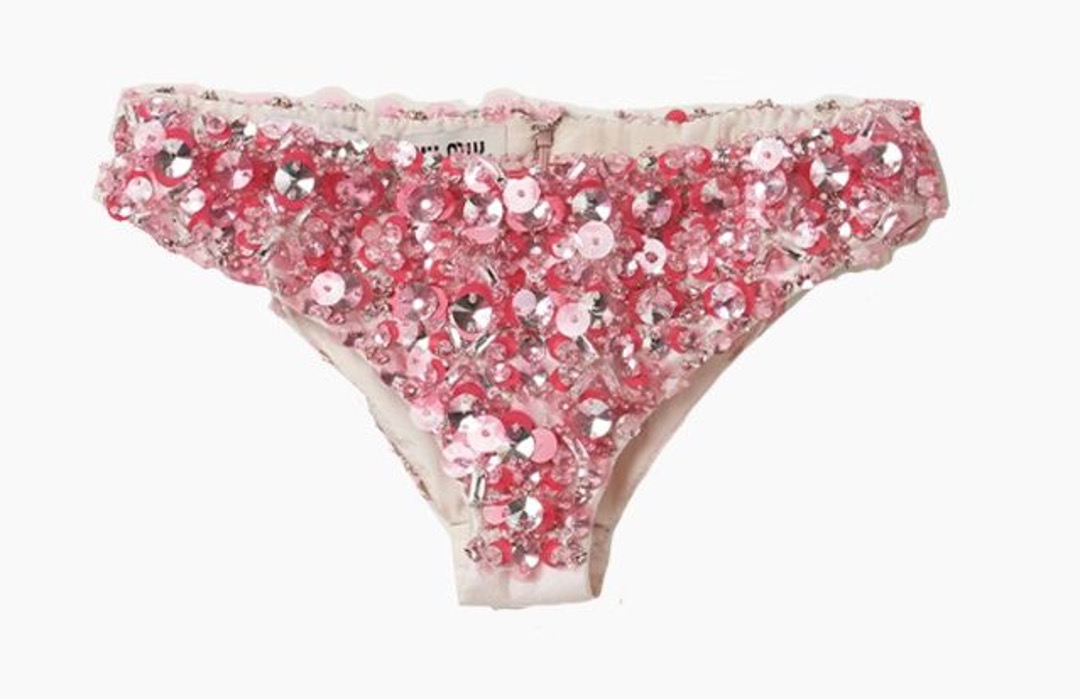
In China, trend-conscious shoppers have propelled Miu Miu into the limelight, seizing on the brand’s fresh energy as the nation’s luxury spending resumes. Miu Miu’s penchant for bold, impractical luxury items – for example, its USD 5,600 embellished silk-and-wool panties – reinforces its “true heiress” image. Chinese netizens quip that only genuinely wealthy “千金”(“rich daughters”) would splurge on such nonessential luxury.
Old-money aesthetic: Crafting the “true heiress” persona
Central to Miu Miu’s China success is its brand persona: a rebellious yet refined “富家千金” (rich heiress) archetype that captivated young consumers. From the outset, Miu Miu targeted very wealthy girls under20, those who “pay with inherited money, not earned income”. The brand’s narrative famously suggests that “buying Chanel doesn’t prove you’re rich, but buying Miu Miu certainly means you are”. In other words, Miu Miu positions itself as the guilty pleasure of old-money youth, unconcerned with practicality or resale value.
Crucially, this narrative tapped into a cultural zeitgeist. In today’s China, many young people openly fantasize about “born rich” lifestyles amid diminishing faith in upward mobility. Miu Miu sold a dream by donning its twee cropped cardigans, sparkly bralettes, or USD 3,000 rhinestone hair clips, ordinary girls can feel like rebellious heiresses. What started as an exclusive niche has become a broader aspiration. Consumers with modest means now scour secondhand markets for Miu Miu pieces or buy “平替” (affordable lookalikes) to emulate the look. In effect, Miu Miu created a compelling fantasy of privilege and whimsy, one that Chinese Gen Z finds irresistible.
Social media dominance: “万物皆可 Miu” (Everything can be Miu)
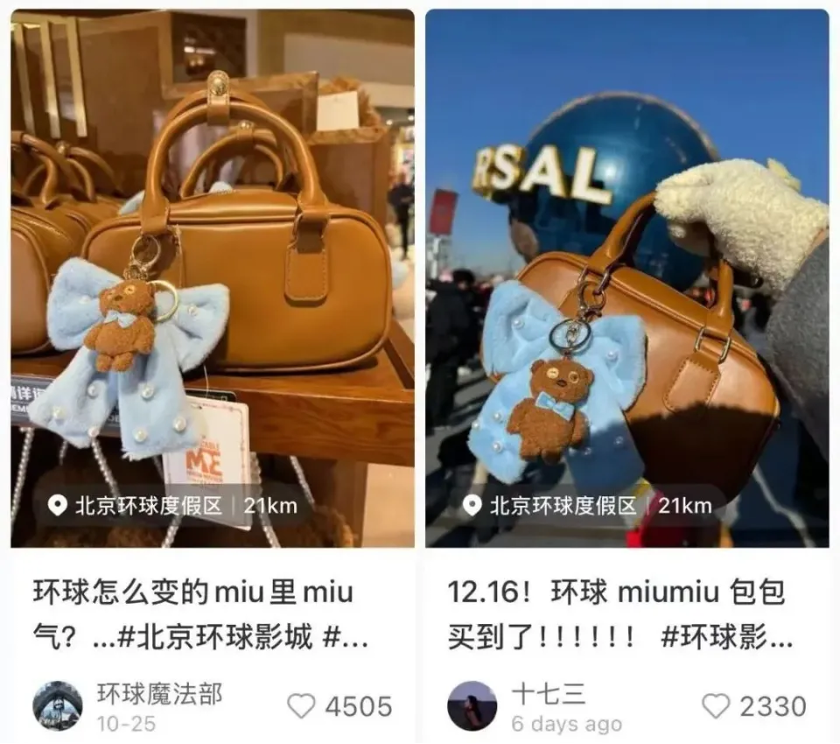
Miu Miu’s explosion in China owes much to savvy digital marketing and social media virality, albeit with a twist distinct from generic luxury playbooks. On Little Red Book in China, hashtags related to Miu Miu amassed over 1.3 billion views and 800,000 user posts by late 2024. Countless young women are flaunting “Miu style” outfits, even if cobbled together from high-street pieces. This led to the saying “万物皆可 Miu” (“everything can be Miu-ified”) as consumers and brands alike mimicked Miu Miu’s aesthetic. In one amusing case, Universal Studios Beijing released a brown mini bowling bag strikingly similar to Miu Miu’s hit handbag; priced at just RMB 299 (USD 2,130). The “Universal Miu bag” sold out immediately as visitors snatched it up for a touch of that heiress style.
Influencer matrix: Gen Z ambassadors and unconventional icons
Miu Miu took a bold “matrix” approach in China, enlisting multiple brand faces to capture diverse facets of Gen Z style. In 2023–2025, the brand simultaneously brought on three popular Chinese actress born after 2000 – Liu Haocun, Zhao Jinmai, and Li Gengxi – rather than a single spokesperson. Each of these “小花” (starlets) embodies a different vibe: Liu exudes elegant yet subversive princess charm, Zhao blends girl-next-door with edgy “soft goth” looks, and Li represents artsy indie cool. Together, Miu Miu essentially segmented the market by persona, aiming to “cover nearly all young consumer aesthetics in one go”.

Miu Miu’s strategy in China amid a cautious luxury market
- Miu Miu built a compelling “old-money heiress” persona that appealed to Gen Z’s fantasies of status and self-expression.
- Its bold product strategy, micro-minis, ballet flats, and retro silhouettes positioned the brand as a fashion originator, not a follower.
- By tapping into viral aesthetics like rich-girl academia, Miu Miu made itself more culturally relevant with young consumers in China.
- The brand dominated Little Red Book, Douyin, and Weibo by embracing community-led content and billion-view hashtag ecosystems.
- Its multi-ambassador model combined Gen Z starlets with unexpected icons, deepening reach and triggering layered fan engagement.
Mastering China’s luxury market dynamics
As China’s luxury market witnesses a robust rebound, positioning your brand effectively in this evolving landscape is paramount. We specialize in strategic consulting for luxury brands aiming to penetrate or expand within the Chinese market, leveraging our deep understanding of local consumer preferences, cultural nuances, and digital trends.
Our services Include:
- Market Insight: We provide comprehensive analyses of the latest trends and consumer behaviours in China’s luxury sector, ensuring your brand stays ahead of the curve.
- Brand Localization: Tailoring your brand’s narrative to resonate with Chinese cultural values and consumer expectations, enhancing relevance and appeal.
- Consulting Services: We offer strategy and management consulting every step of the way.
- Regulatory Navigation: Assisting with the legal and regulatory aspects of entering and operating in the Chinese market, ensuring smooth and compliant business practices.
Connect with our team of experts to refine your strategy and secure your brand’s position in China’s thriving luxury market.